Primary Curriculum
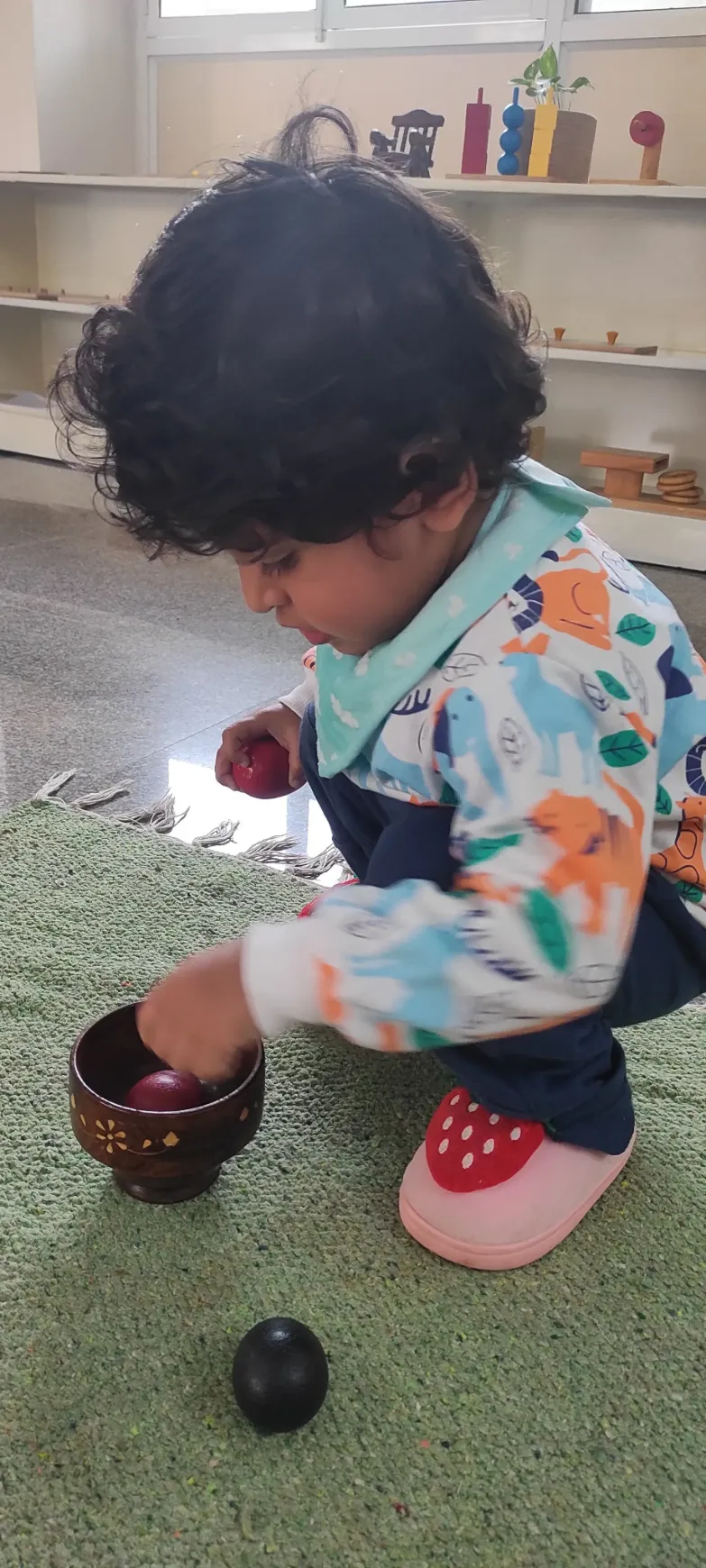
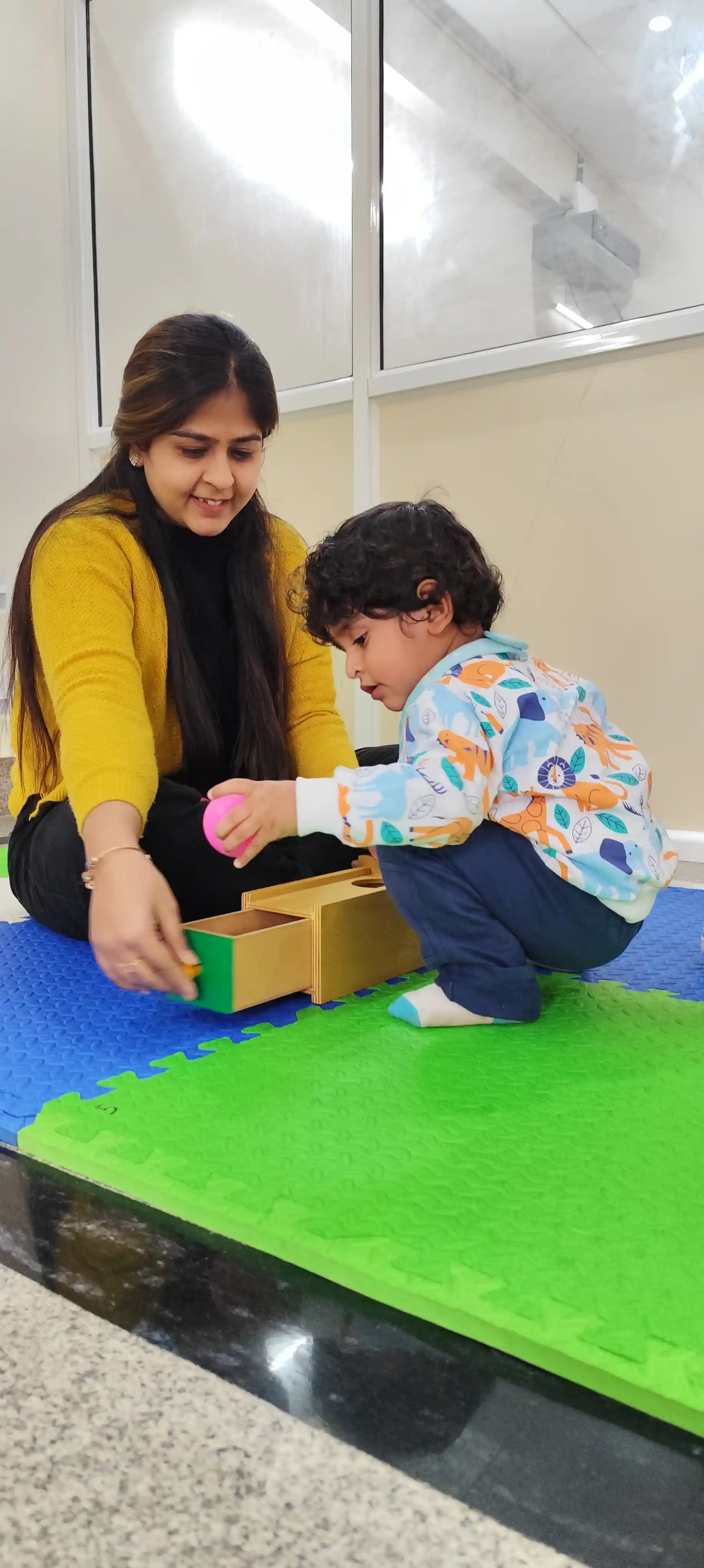
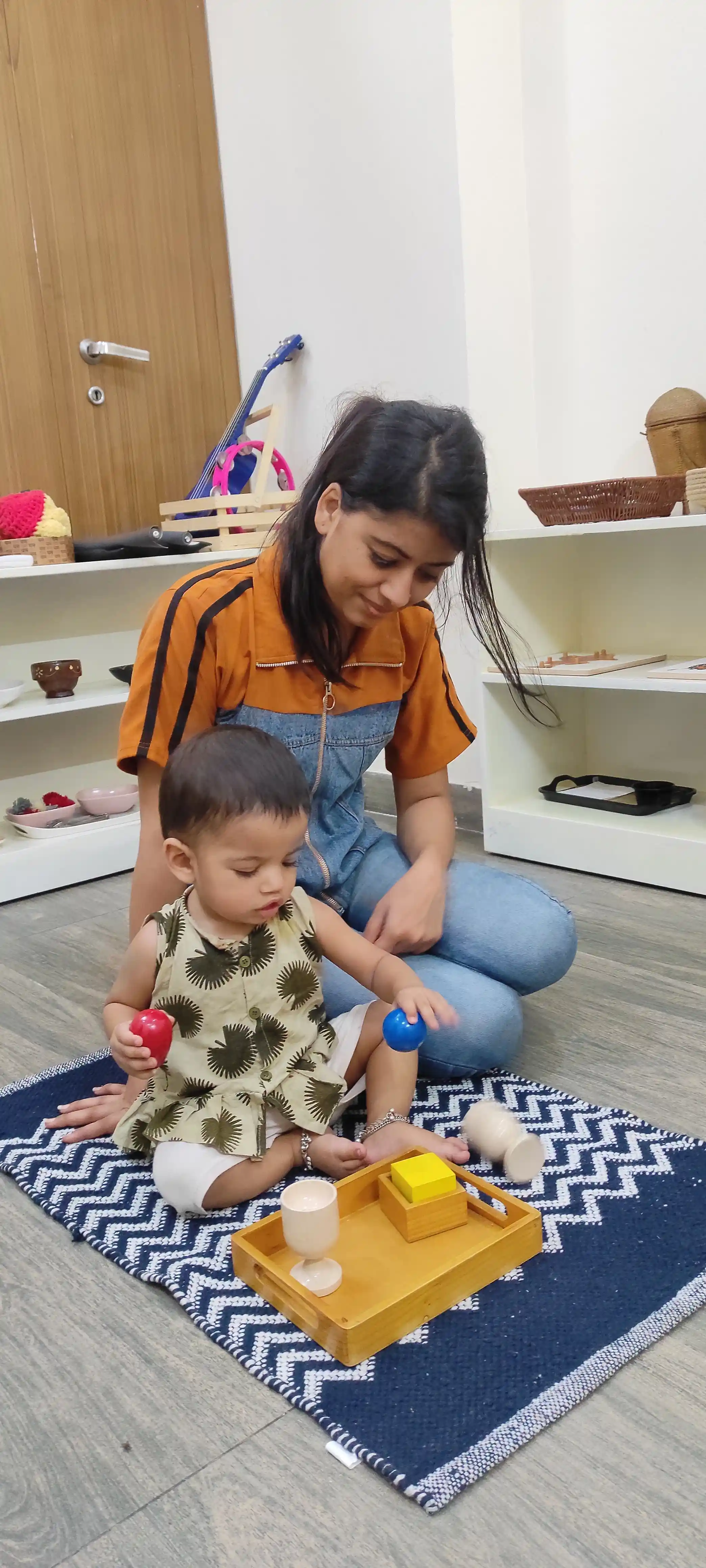
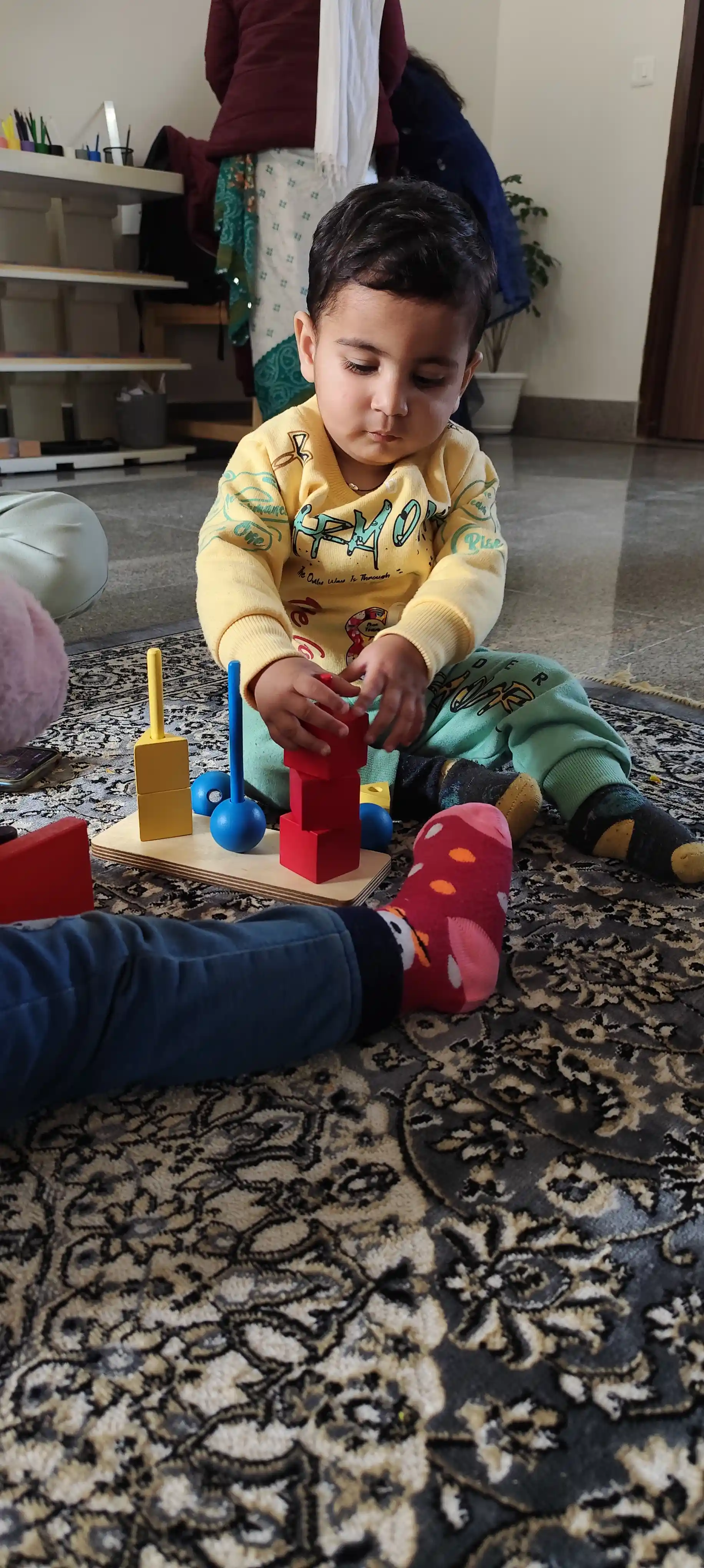
Throughout the primary curriculum the children engage in hands-on learning using developmentally appropriate, concrete, multi-sensory, self-correcting Montessori material. Our primary curriculum for children of the age 3 to 6 years focuses mainly on five areas: EPL (Exercises of Practical Life), Sensorial, Language, Mathematics, Geography.
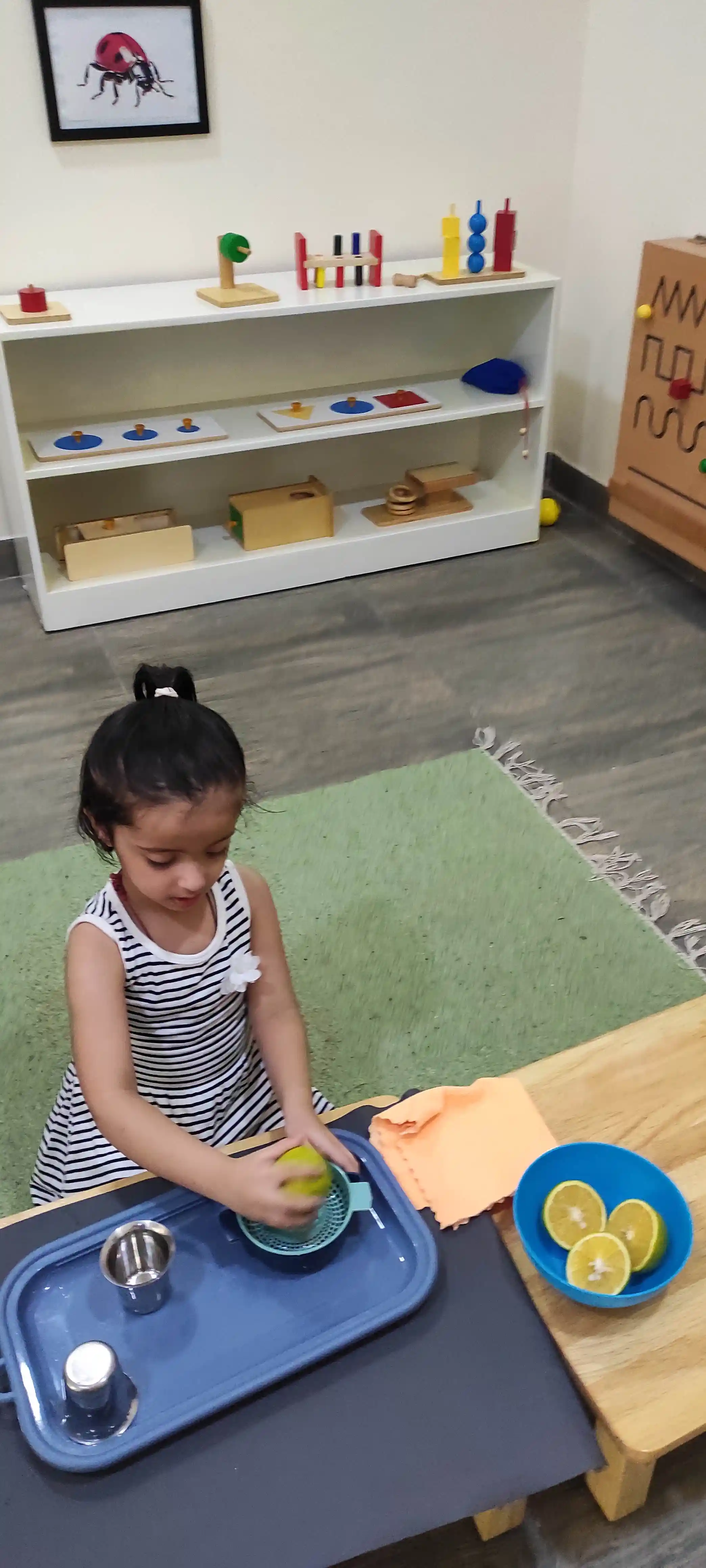
Exercises of Practical Life
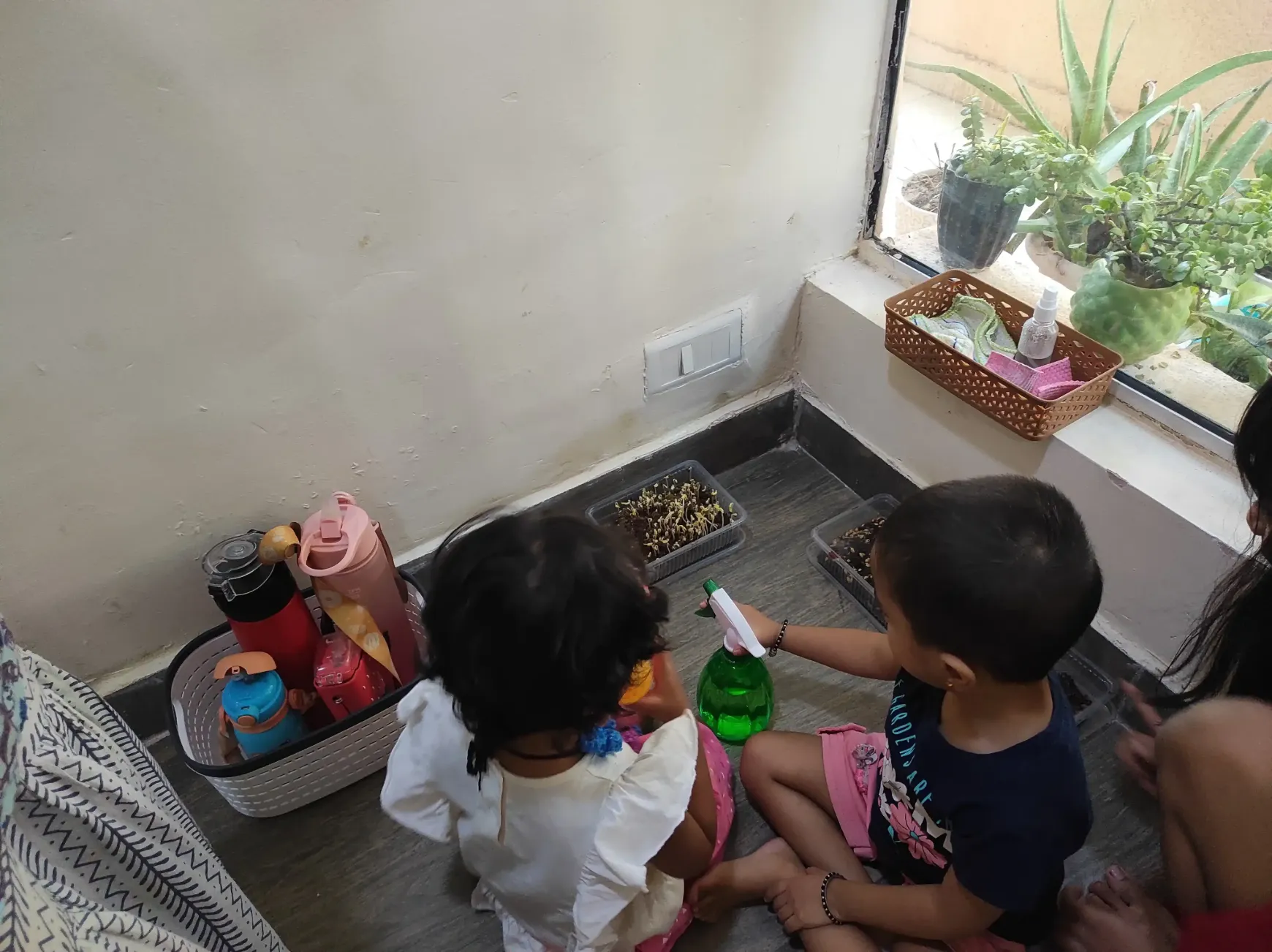
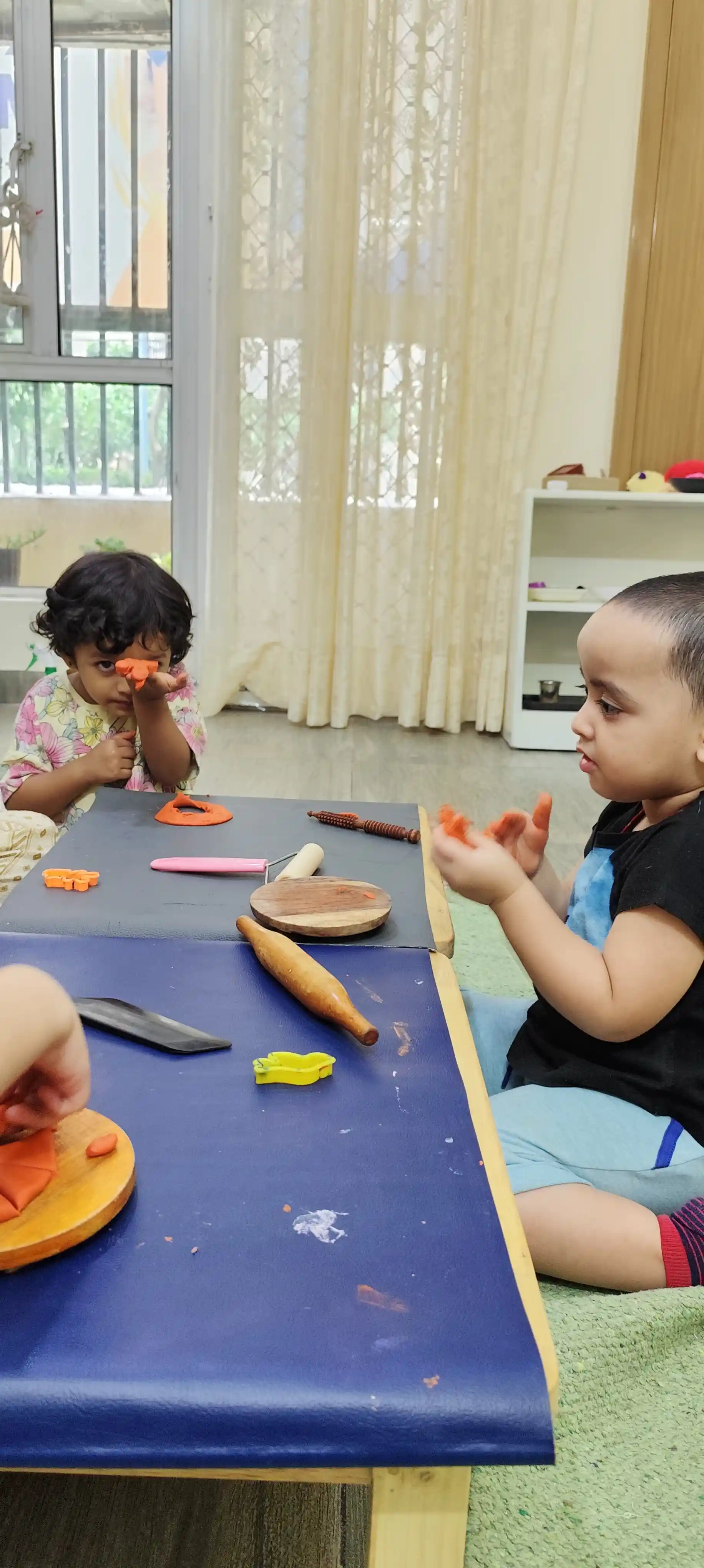
Exercises of practical life: Building life skills-Independence, concentration and responsibility
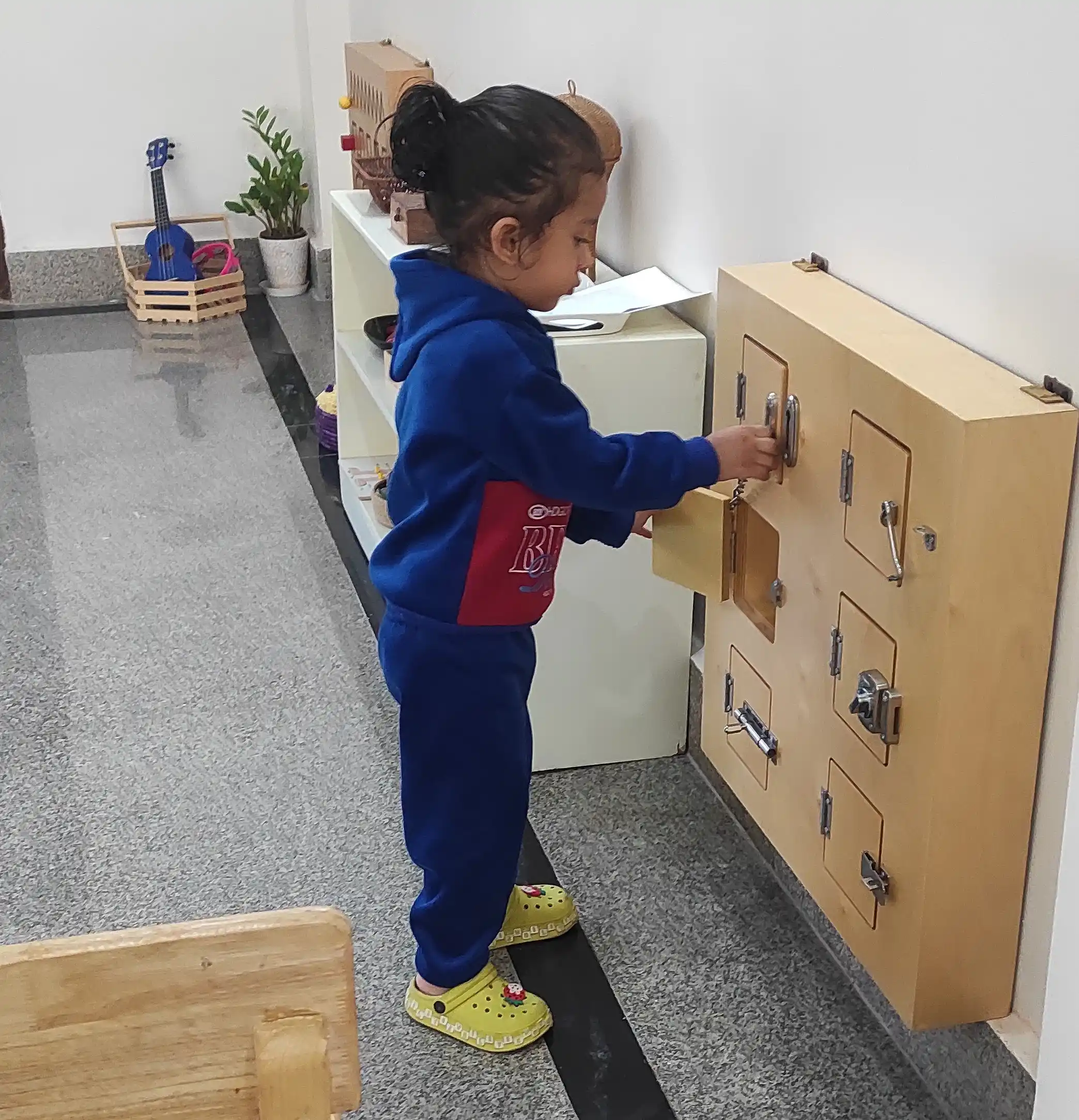
In the Montessori classroom, young children are normally drawn first to the Practical Life area because these materials are most familiar to them. The Exercises of Practical Life have objects and materials normally encountered in everyday living experiences such as cleaning, sweeping, pouring, dressing, plant and animal care. The Exercises of Practical Life fall into four major categories: Care of the Self Care of the Environment Grace and Courtesy Control of Movement. Many are fundamental exercises that the child needs to master to be able to live comfortably in the real world. Practical Life activities help the child develop coordination, concentration, a sense of personal independence, and a sense of order. Through the exercises of Practical Life, the child develops the self-confidence and attention essential for mastery of the other more advanced areas of the Montessori classroom.
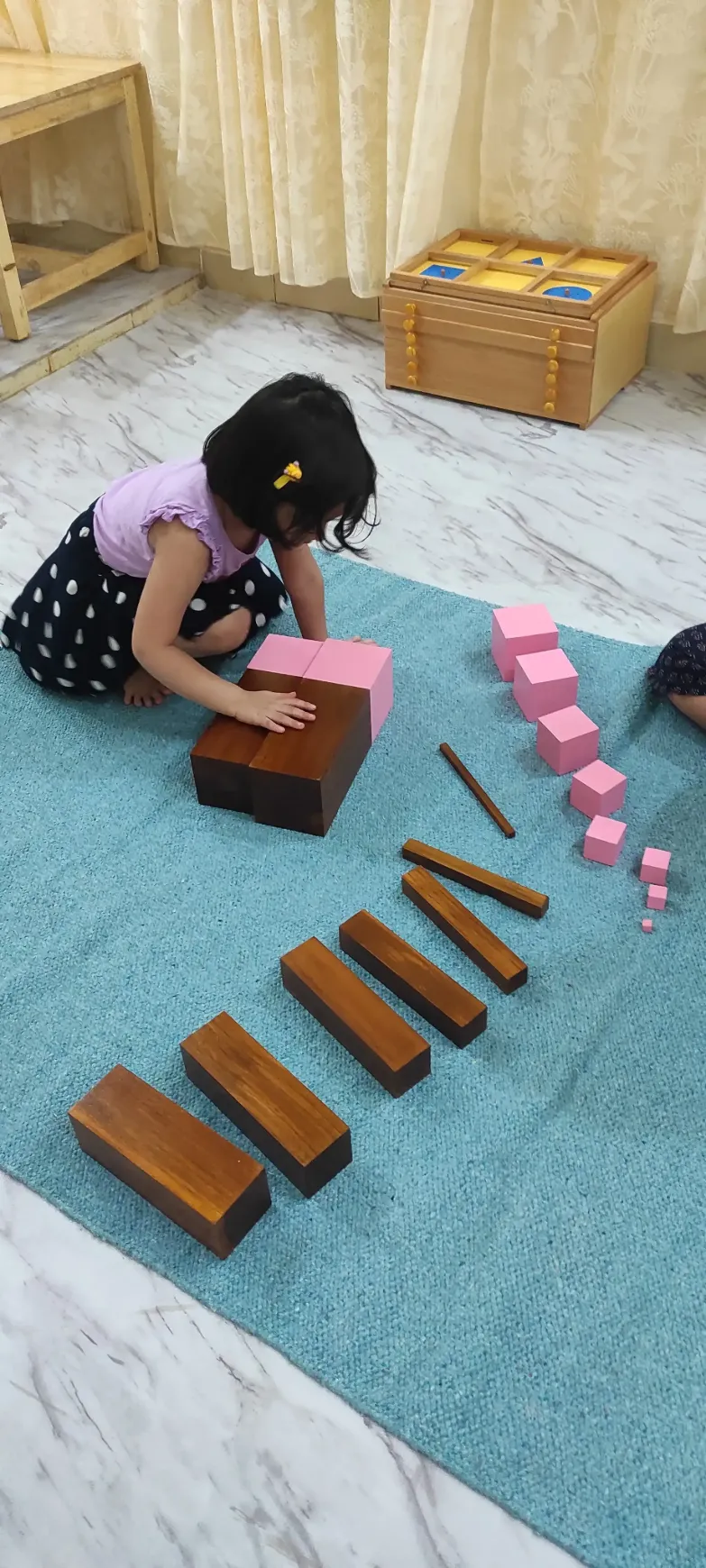
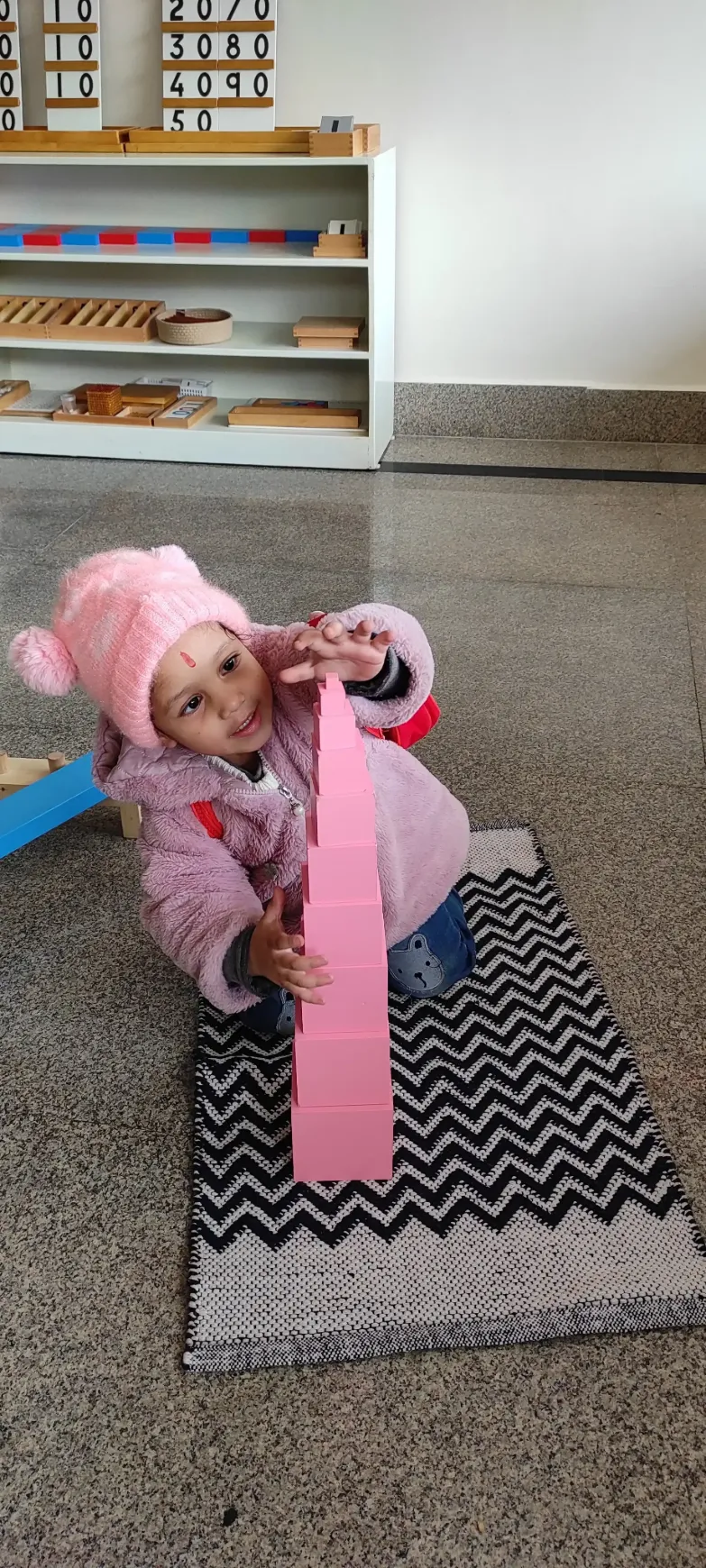
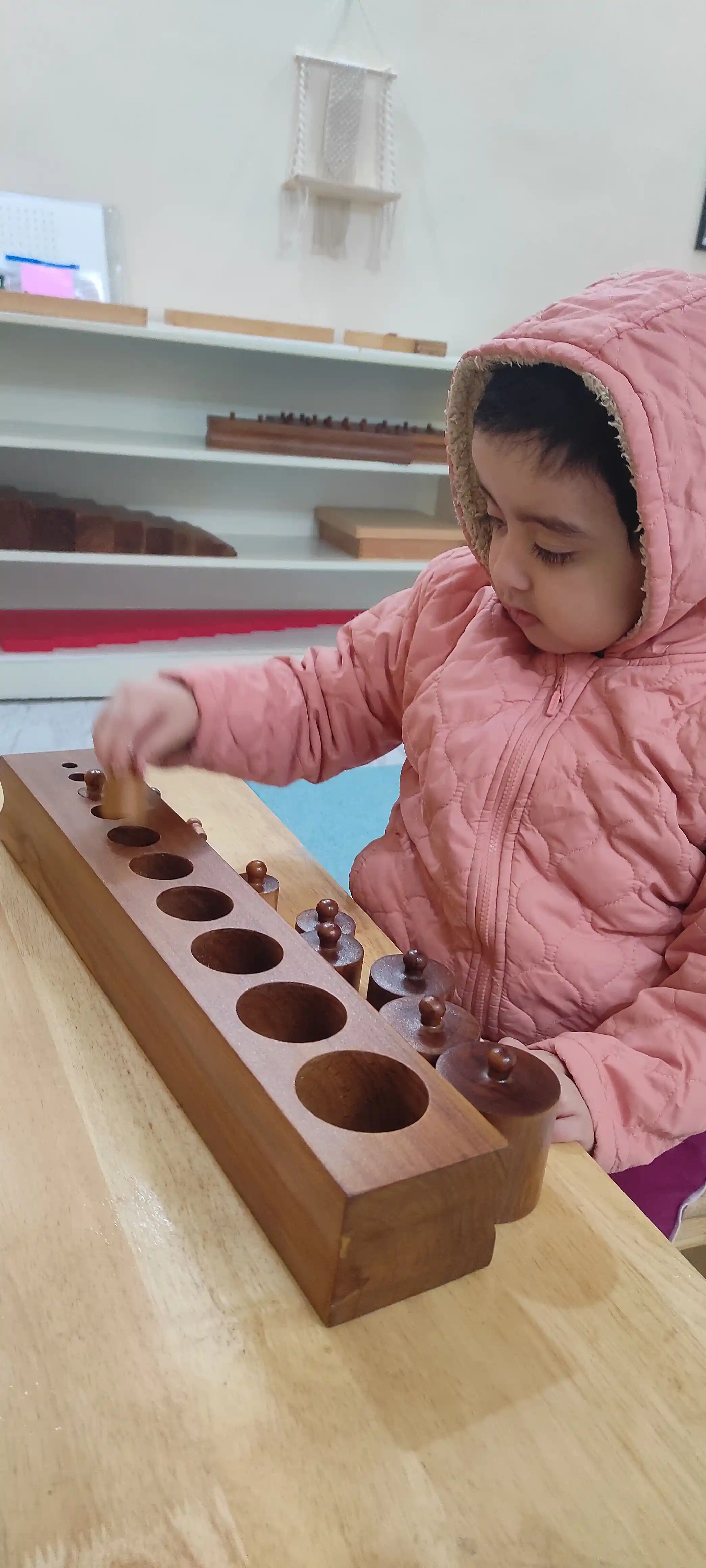
Sensorial
Sensorial: Exploration of senses through scientifically designed materials
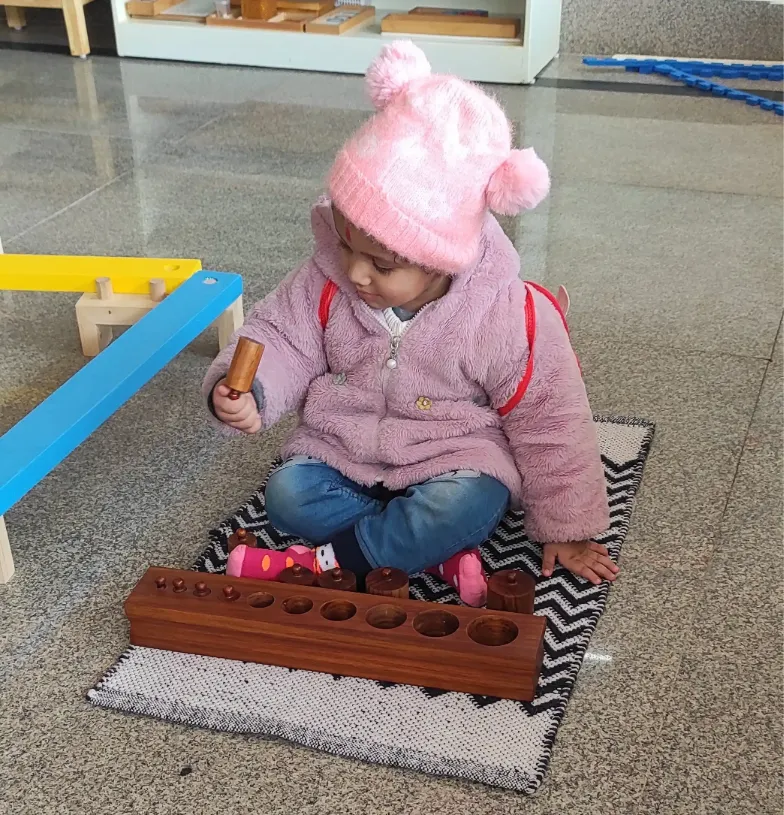
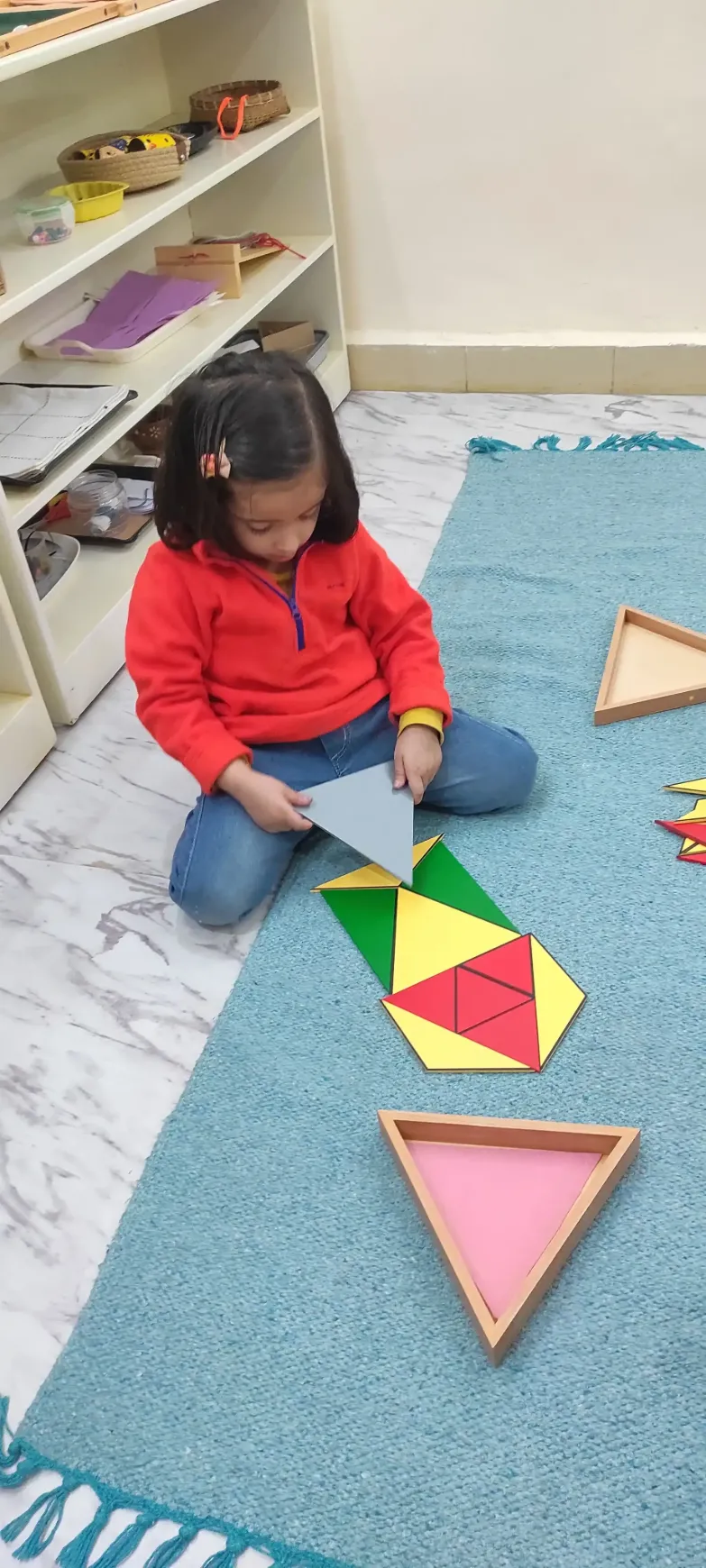
The Sensorial area consists of materials that educate and refine the child's senses. The child learns to recognize similarities and differences, to discriminate between similar objects; to grade similar objects. Qualities discriminated with the Visual sense are size, shape, and color; with the Tactile sense are texture, temperature, and pressure; with the auditory sense are intensity and pitch. Basic sensations of sweet, sour, bitter, and salty are discriminated with the Gustatory sense; various odors/fragrances are used to discriminate the olfactory sense. A primary purpose of the Sensorial Exercises is that "the child train himself to observe, that he be led to make comparisons between objects, to form judgements, to reason and to decide.
Language
Language: Development of Early-Literacy skills through the use of phonetic sounds.
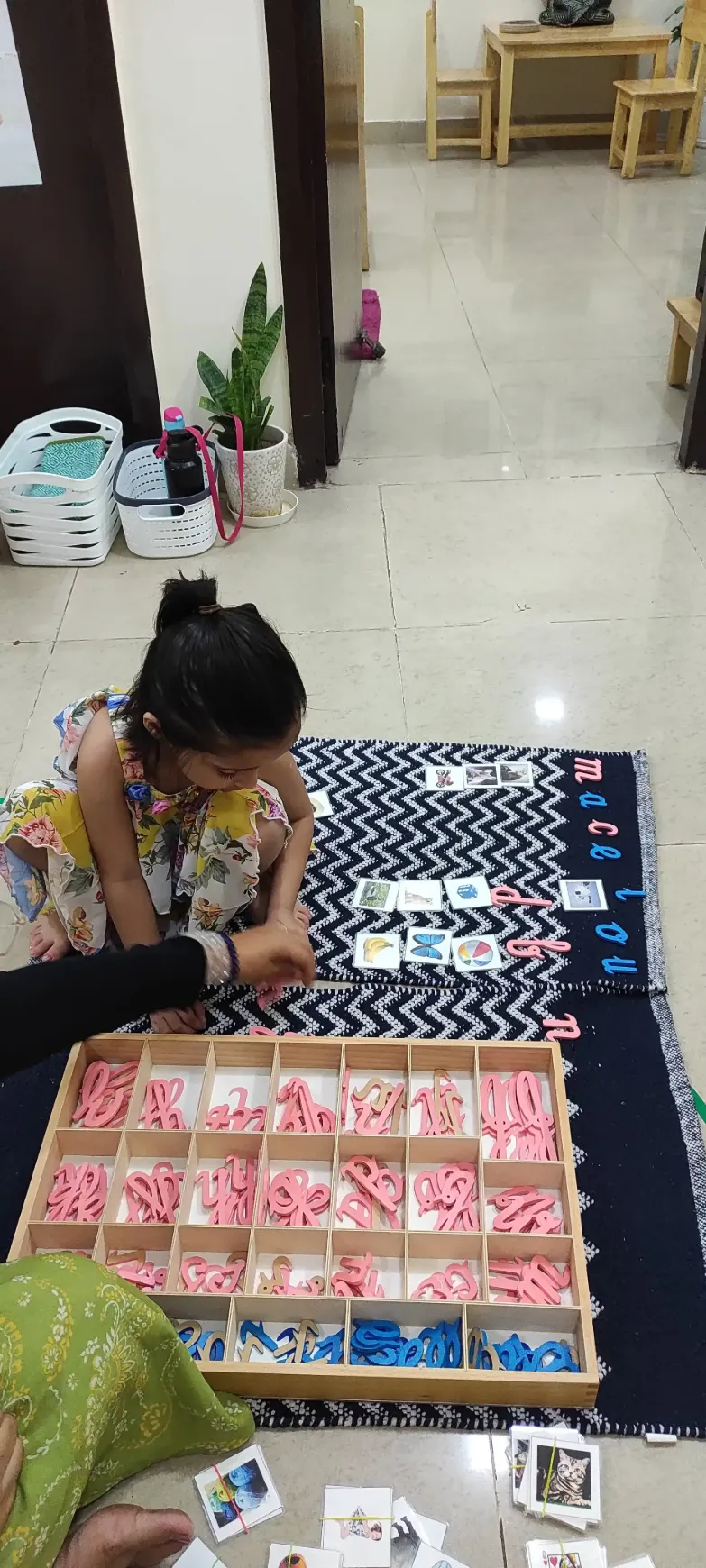
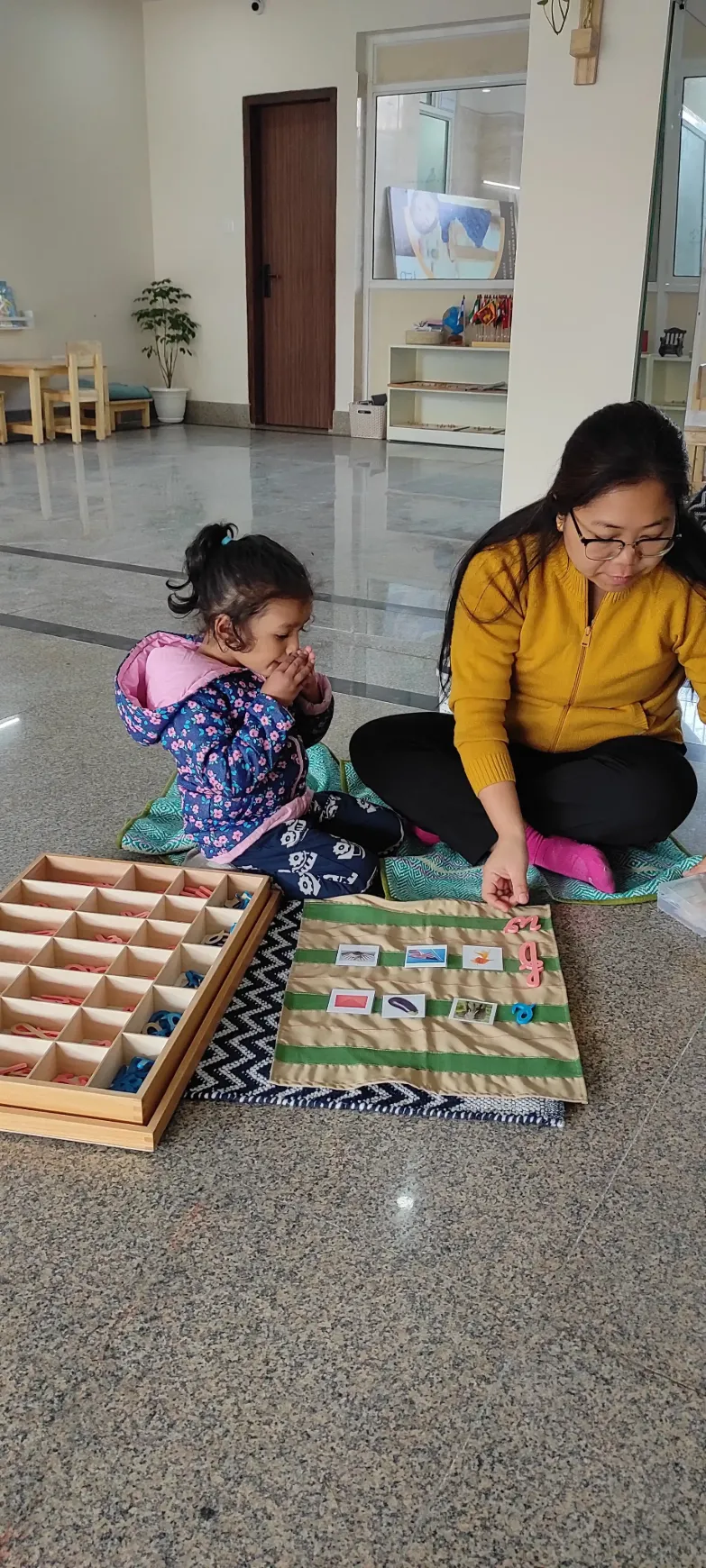
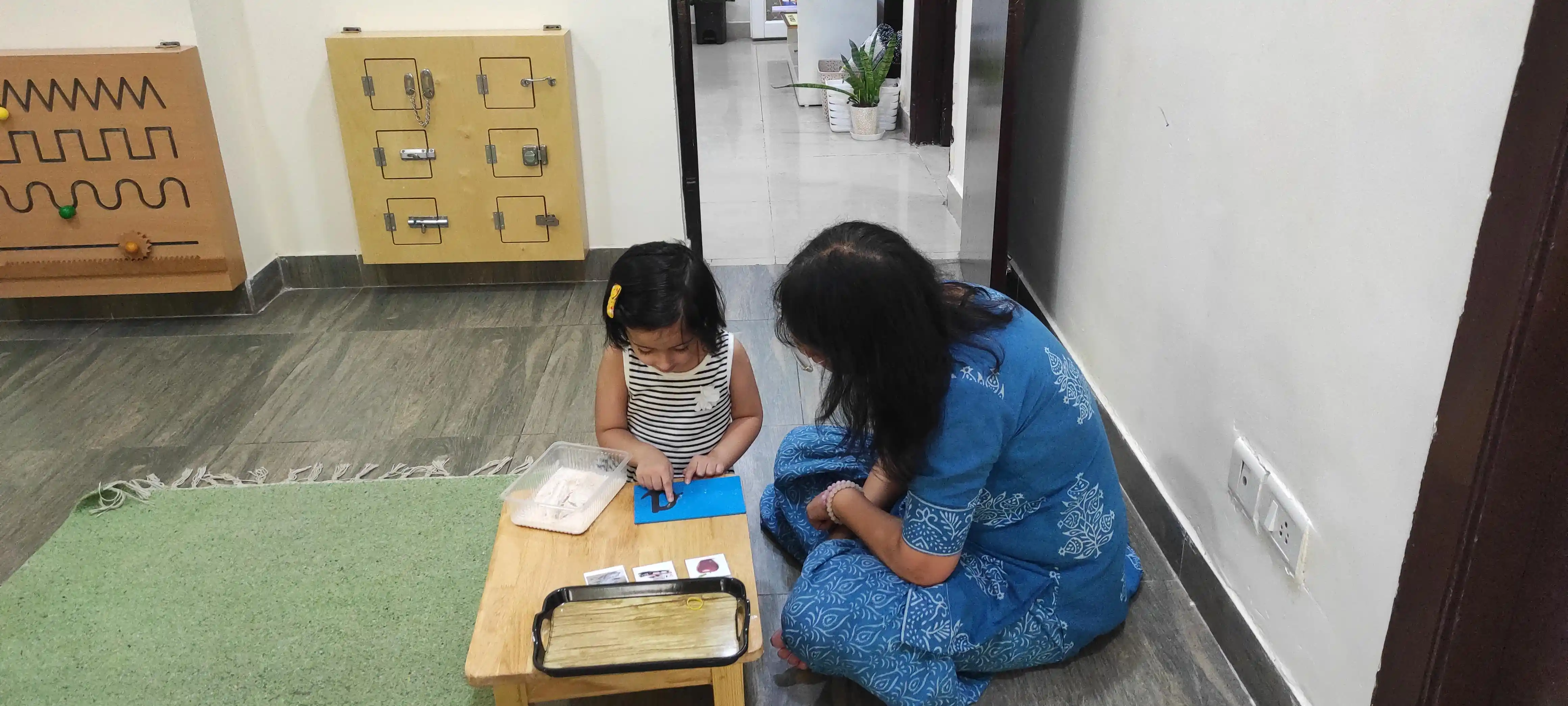
The foundation of our language program is Phonetics. Speech is made up of various sounds. Our Language program focuses on building on this knowledge of the child. Hence we begin with phonetics which brings the child's attention to the different sounds that each word is made up of and then introduce alphabets that correspond to those sounds and after he has understood the method of co-relating sounds with their symbols which gives him a boost in Reading and Writing he is then given the names of the symbols (alphabets).
Mathematics
Mathematics: Development of Numerical skills.
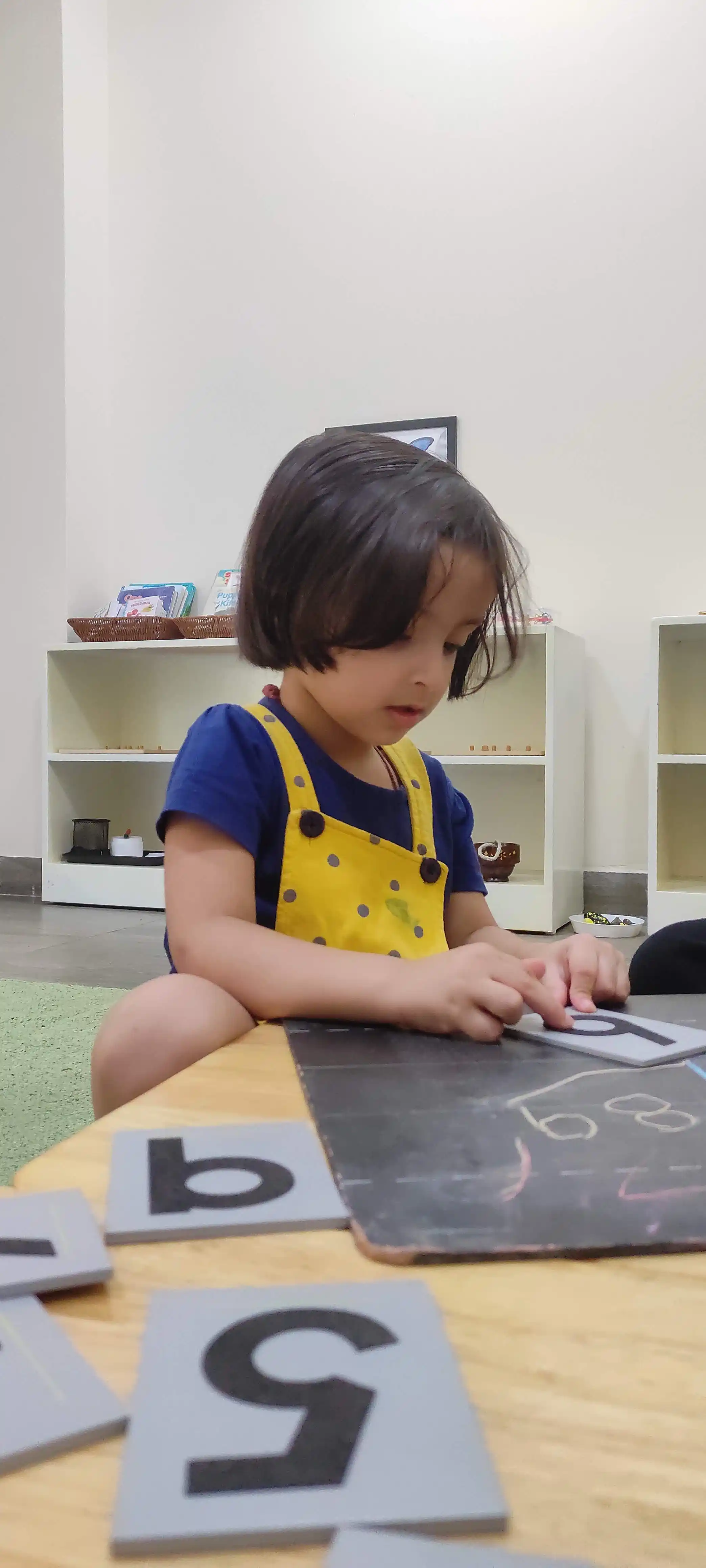
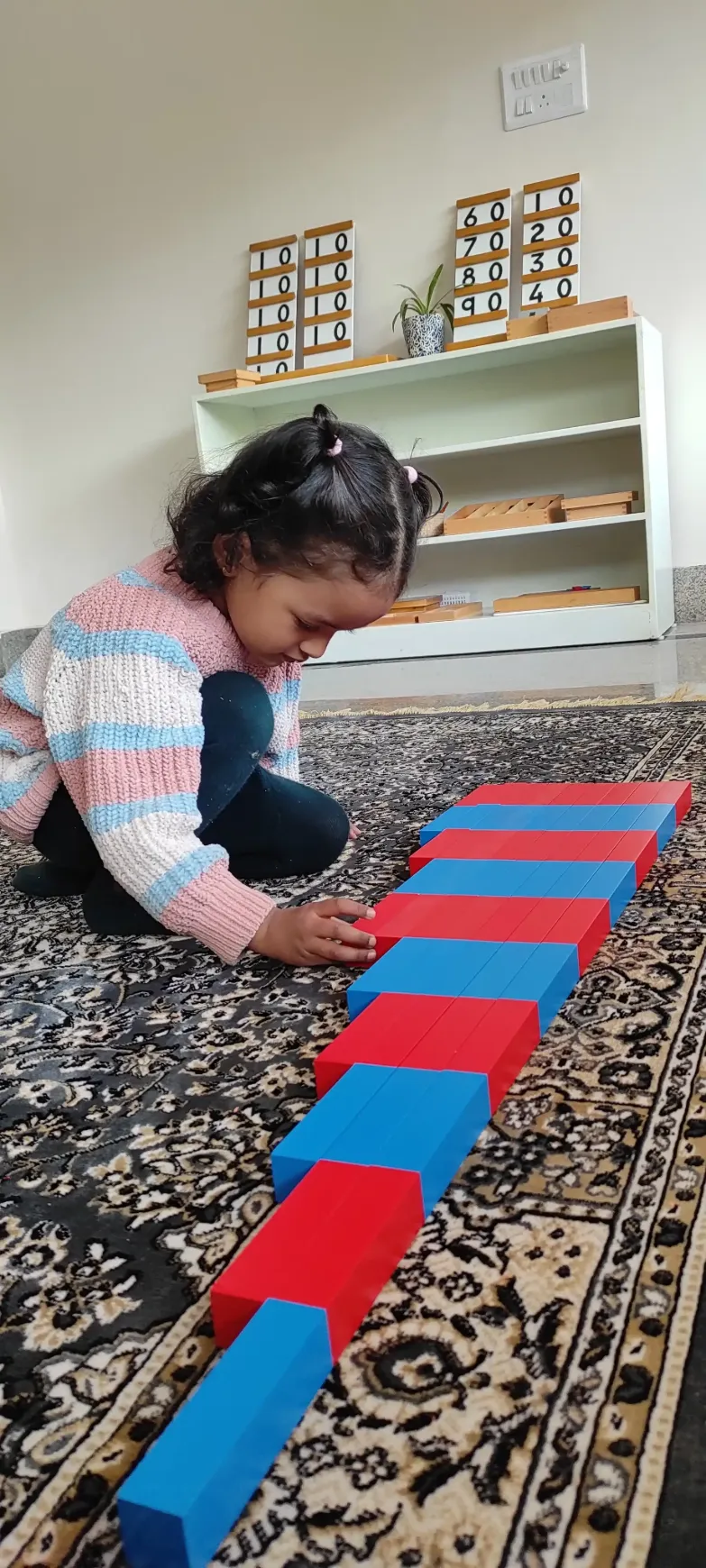
Montessori believed that a child's mind is mathematical and based on the order of perceptual awareness found in the development of the senses. The acquisition of mathematical principles is seen as developing logically from concrete to abstract, and from simple to complex. It start from 1-10 and involves associating number names, quantities and symbols. This area of learning follows a definite pattern based on which concrete materials are offered. The child conceives all the abstractions of operations of addition, subtraction, multiplication and division.
Culture: Geography, Zoology & Botany
Culture: Awareness of the world around us
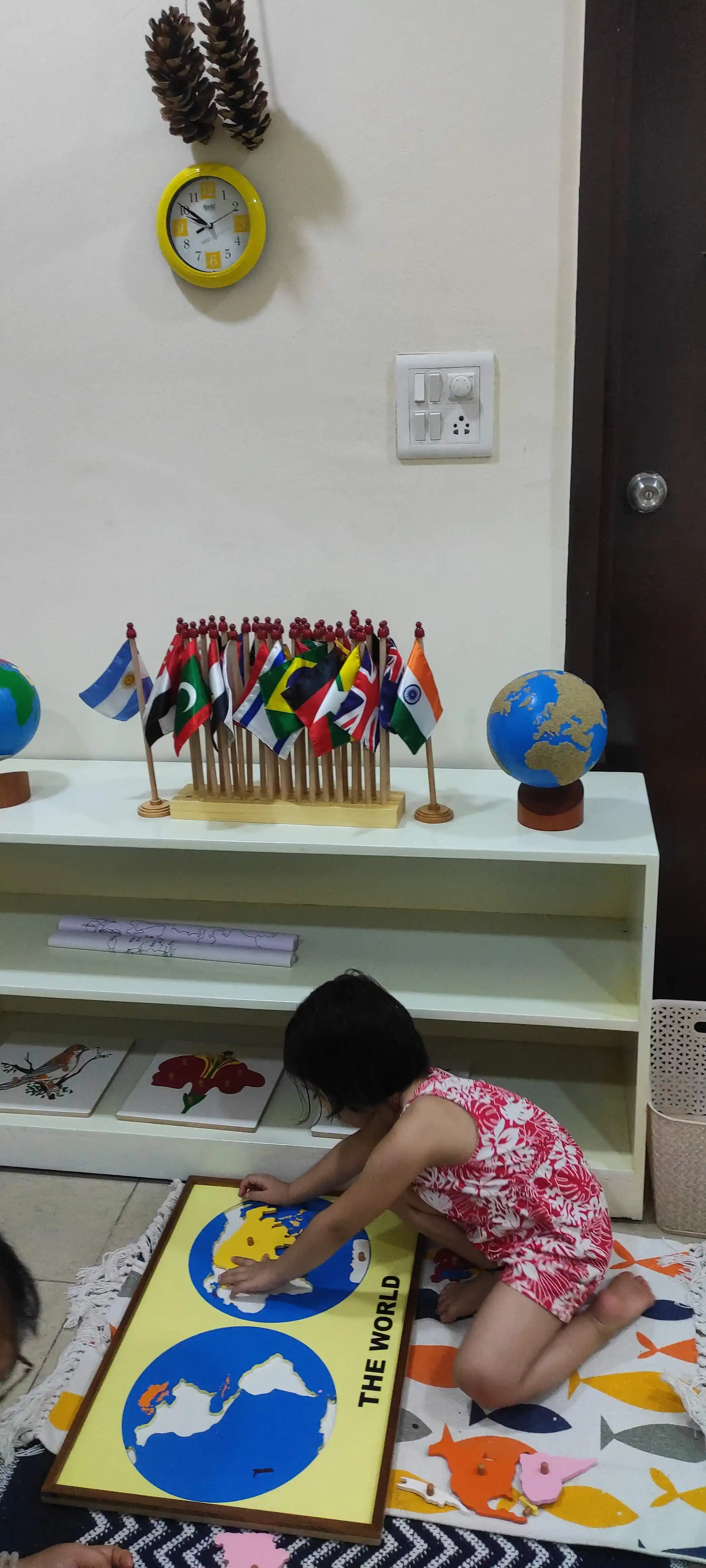
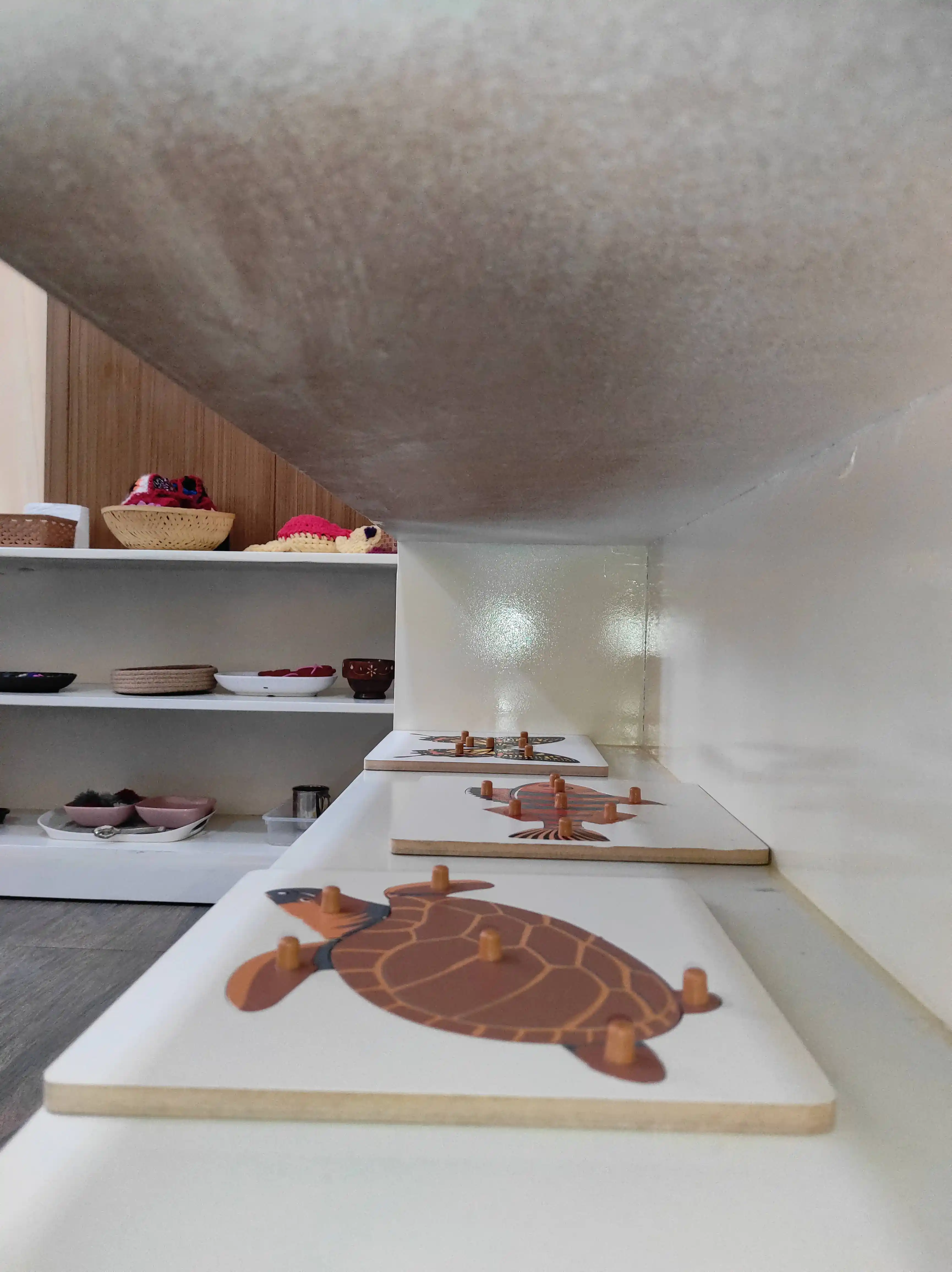
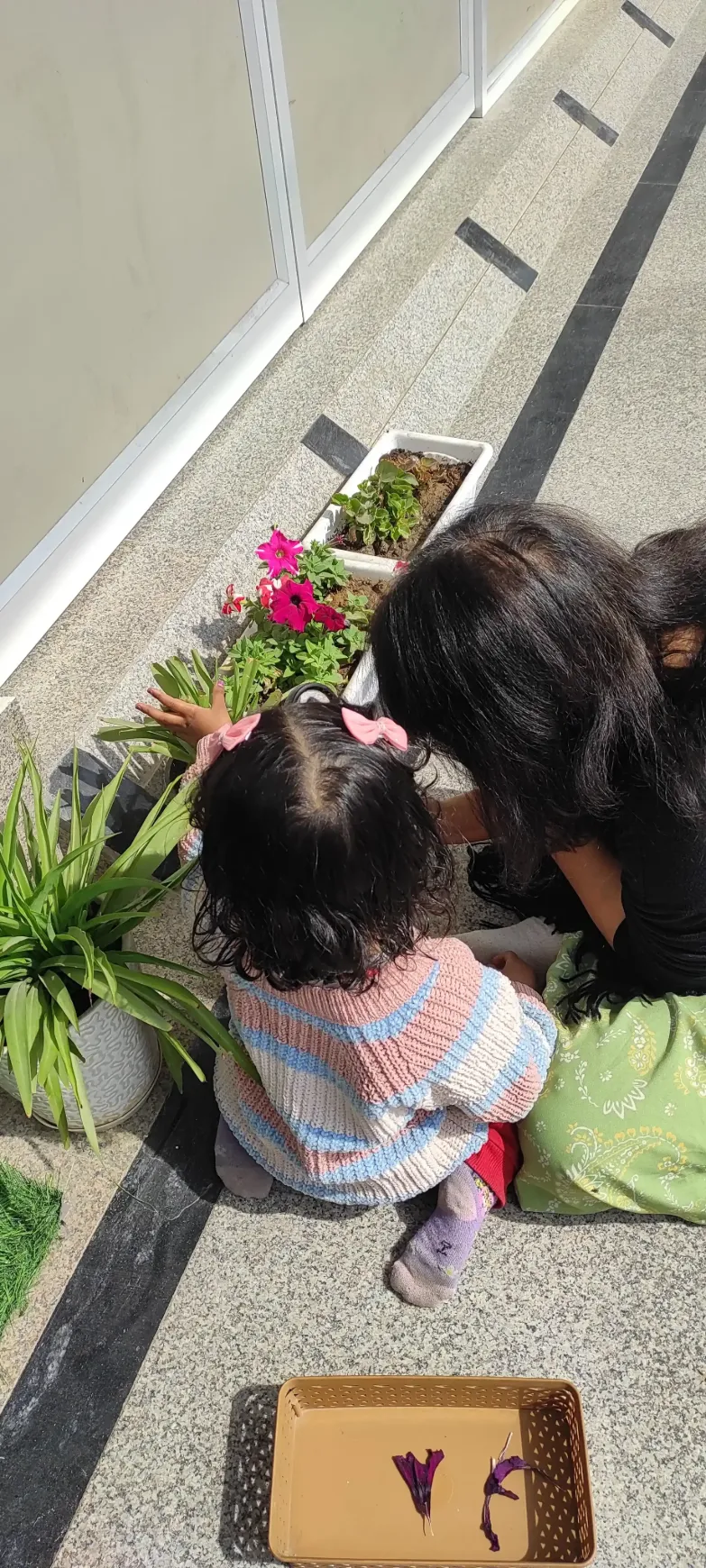
The Montessori cultural area includes variety of subjects - geography, botany, zoology, science, art, and music. By studying these subjects will provide children pan opportunity to explore their curiosity of different and worldly ideas. Geography: Children learn about the world through tactile feelings of the Globe through puzzles and picture cards. The landforms like Lakes, Islands, Bays and Capes are hands on learning and the children can see visually the water bodies. The continents are colour coded so that the child can associate the Continents easily. This way the child can work through the activities with joy and interests. Zoology: Children in the Montessori classroom learn about insects and animals through puzzles, objects and pictures. They learn about Vertebrates and Invertebrates through nomenclature cards which helps to child to know the parts of the animals. They are also introduced to Life Cycle of animals through stories and songs. This way the child connects with nature and understand that animals too live in Earth. Botany: In the Montessori classroom child learn about different kinds of leaves with the Botany Cabinet and match it with the cards. They also learn the parts of the plants through puzzles and rhymes. Through the hands on learning the children experience visually about the plants and names of different flowers along with the colours. Nomenclature cards helps to identify the parts of the plants and this way Botany becomes a lesson with utmost joy and curiosity to learn about the plants and is also encouraged through art and music.